Why do we study the American Revolution?
Compare tax plans, representation, and competing arguments in a colonial council exercise. Trace how a dispute developed into independence.
Real-world educational questions and lessons explaining when, where, and why students use concepts they learn in school.
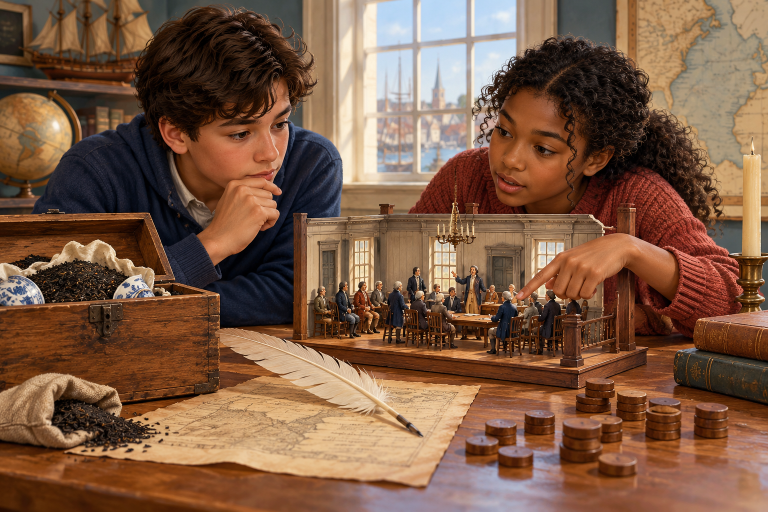
Compare tax plans, representation, and competing arguments in a colonial council exercise. Trace how a dispute developed into independence.

Investigate Rome’s legacy through roads, water, calendars, and people’s experiences. Compare claims, test evidence, and defend a conclusion with limits.

Use an interactive Revolution timeline to test sequence, calculate intervals, and separate causes from events that merely happened earlier.

Plan a trading network, compare route costs, and adapt when a pass closes. Discover how geography and supply chains connect communities.

Investigate a medieval outbreak using a route model. Compare patterns of spread, test the model’s limits, and trace effects on work and trade.
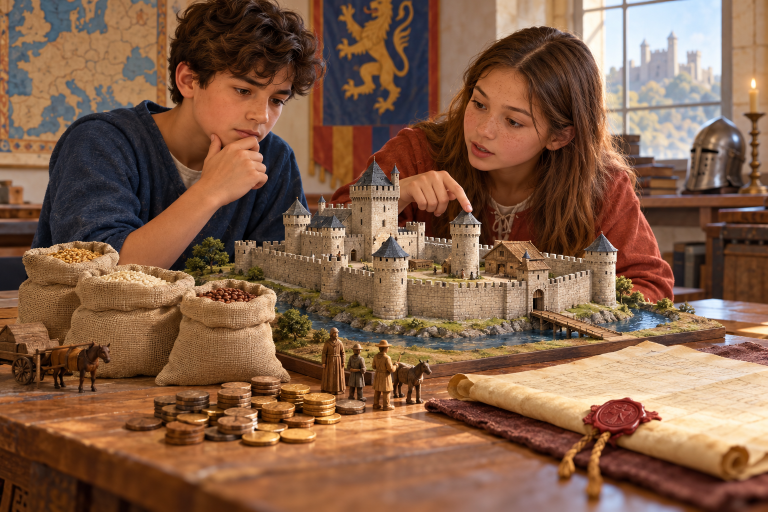
Manage a fictional medieval treasury, compare competing requests, and examine King John’s Magna Carta as evidence of limits on royal decisions.

Run a copying-workshop challenge to compare setup time, production, and errors. Discover why faster distribution does not guarantee accurate information.
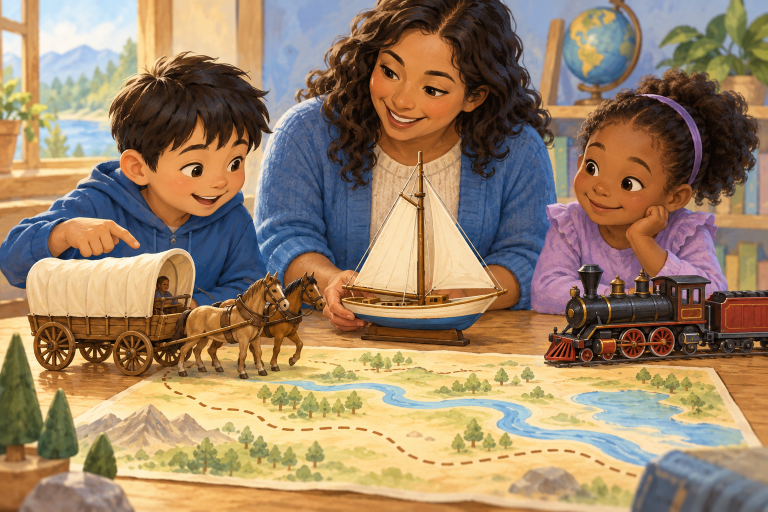
Choose paths, rivers, and railways for three imaginary journeys. Discover how travel routes shaped places and practice planning a trip.

Could you be friends with a child from the past? Explore breakfast, learning, and play, then discover how different people’s stories connect to your life.

Become a place detective! Explore a doorway, a map, and a monument’s message to discover why everyday historic places matter.